

Your Facebook ads are getting clicks but not converting.
Your creative testing strategy isn't yielding the breakthrough results you expected.
Despite pouring thousands into ad spend, your ecommerce advertising strategy feels like throwing money into a black hole.
Why? You're likely dealing with creative strategy gaps that stem from a fundamental misunderstanding of where your customers are in their buying journey.
The solution isn't more budget or flashier creatives — it's understanding the five stages of customer awareness and how to match your ad creative strategy to each stage.
👋 Want to skip the knowledge and go straight to the solution? Get an AI Creative Strategist to do a customer awareness audit on your Meta ad account for free with Motion.
Why most ecommerce creative strategies fail
Why do most creative advertising strategies fall short?
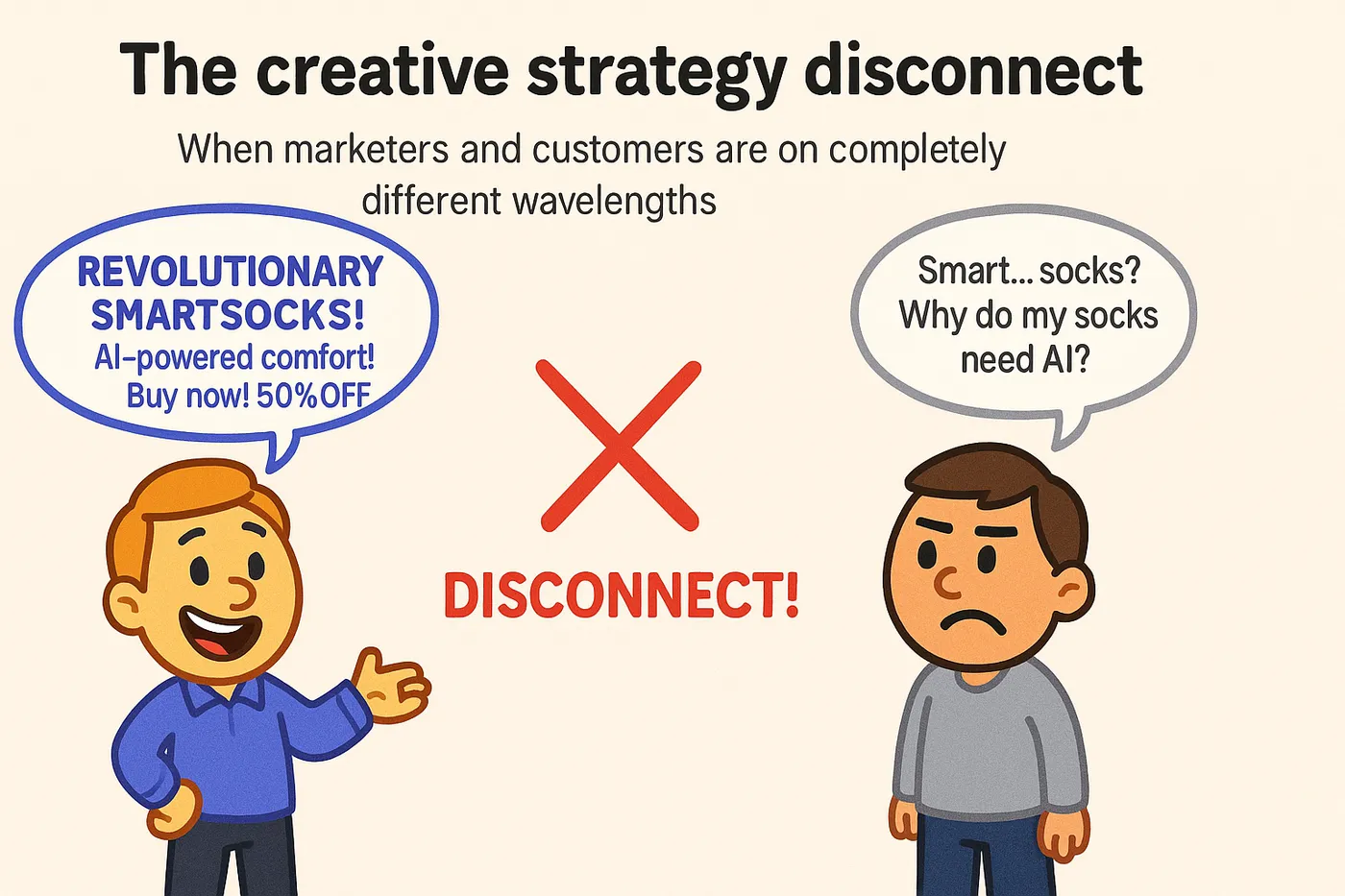
The problem isn't your product, your targeting, or even your budget. It's that you're speaking the wrong language to your audience at the wrong time.
Most brands create ads from their own perspective, focusing on product features and benefits without considering their customer's current awareness level.
This disconnect between your marketing creative strategy and your audience's mindset is what creates those frustrating creative strategy gaps that kill conversion rates.
The harsh reality: Eugene Schwartz identified this problem decades ago in his copywriting classic "Breakthrough Advertising," yet most performance marketing creative teams still haven't learned this fundamental lesson.
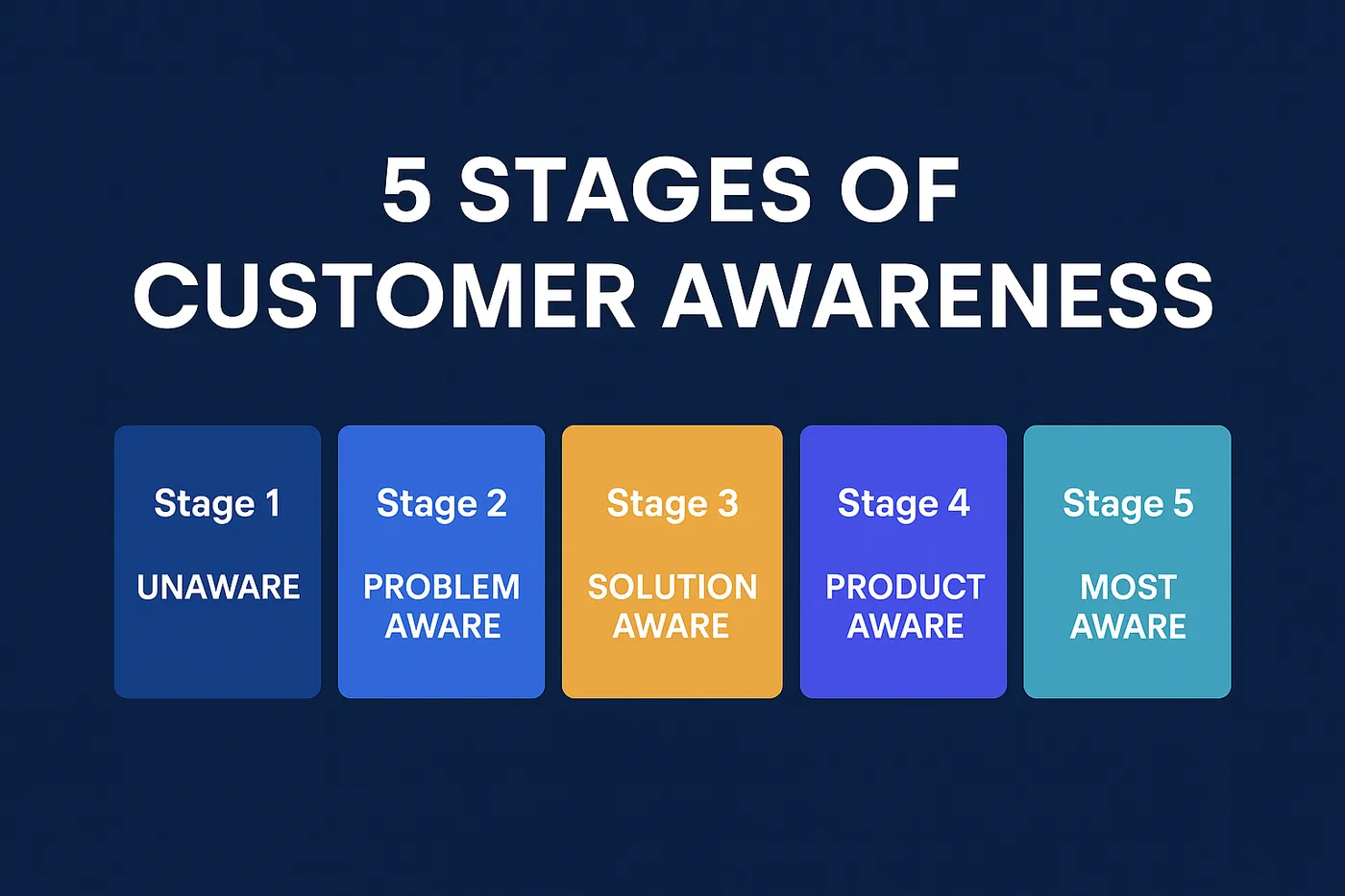
The five stages of customer awareness: Your creative strategy framework
Understanding buyer awareness stages is crucial for developing an effective creative strategy analysis. Here's how each awareness stage impacts your marketing approach:
Stage one: Unaware (The largest untapped market)
Customer mindset: They don't know they have a problem or need
The opportunity: This is your biggest potential market, but also the most challenging to convert
Creative strategy approach:
- Focus on problem identification, not solution promotion
- Use storytelling and relatable scenarios
- Create content that sparks curiosity about potential issues
- Avoid mentioning your product directly
Example messaging: Instead of "Our skincare serum reduces wrinkles," try "Why your current skincare routine might be aging you faster"
Stage two: Problem aware (Ready to engage)
Customer mindset: They recognize they have a problem but don't know solutions exist
The opportunity: These customers are actively seeking information and are highly receptive to educational content
Creative strategy approach:
- Create problem-centric content that validates their concerns
- Use SEO for problem-related keywords
- Focus on education over promotion
- Position your brand as a helpful guide
Example messaging: "Struggling with late-night sugar cravings? Here's what's really happening to your metabolism"
Stage three: Solution aware (Comparison shopping)
Customer mindset: They know solutions exist but haven't chosen which type is best
The opportunity: Guide them toward your solution category while building trust
Creative strategy approach:
- Create solution-focused content and comparison guides
- Use SEO for solution-based keywords
- Showcase different approaches to solving their problem
- Begin introducing your methodology subtly
Example messaging: "The three proven approaches to stopping sugar cravings (and why most people choose the wrong one)"
Stage four: Product aware (Evaluating options)
Customer mindset: They know your product exists but aren't sure if it's right for them
The opportunity: Address objections and demonstrate unique value
Creative strategy approach:
- Create detailed product comparisons
- Use case studies and social proof
- Address common objections directly
- Highlight unique differentiators
Example messaging: "How our metabolism-balancing formula compares to other sugar craving solutions"
Stage five: Most aware (Ready to buy)
Customer mindset: They want your product but need a final push
The opportunity: Remove final barriers and create urgency
Creative strategy approach:
- Focus on offers and incentives
- Create urgency and scarcity
- Simplify the purchase process
- Address final objections
Example messaging: "Get 30% off your first order of our metabolism-balancing formula — limited time offer"
How to audit creative strategy gaps in your current campaigns
Now that you understand the customer awareness marketing framework, let's analyze ad creative performance to identify where your strategy is failing.
Step one: Analyze your current ad creative strategy
Audit your existing campaigns using these questions:
- What awareness stage are your ads targeting?
- Are you matching message to market awareness level?
- Do you have creative assets for each stage of the funnel?
- Where are most of your conversions coming from?
Step two: Identify creative strategy gaps
Common gaps in ecommerce creative strategy:
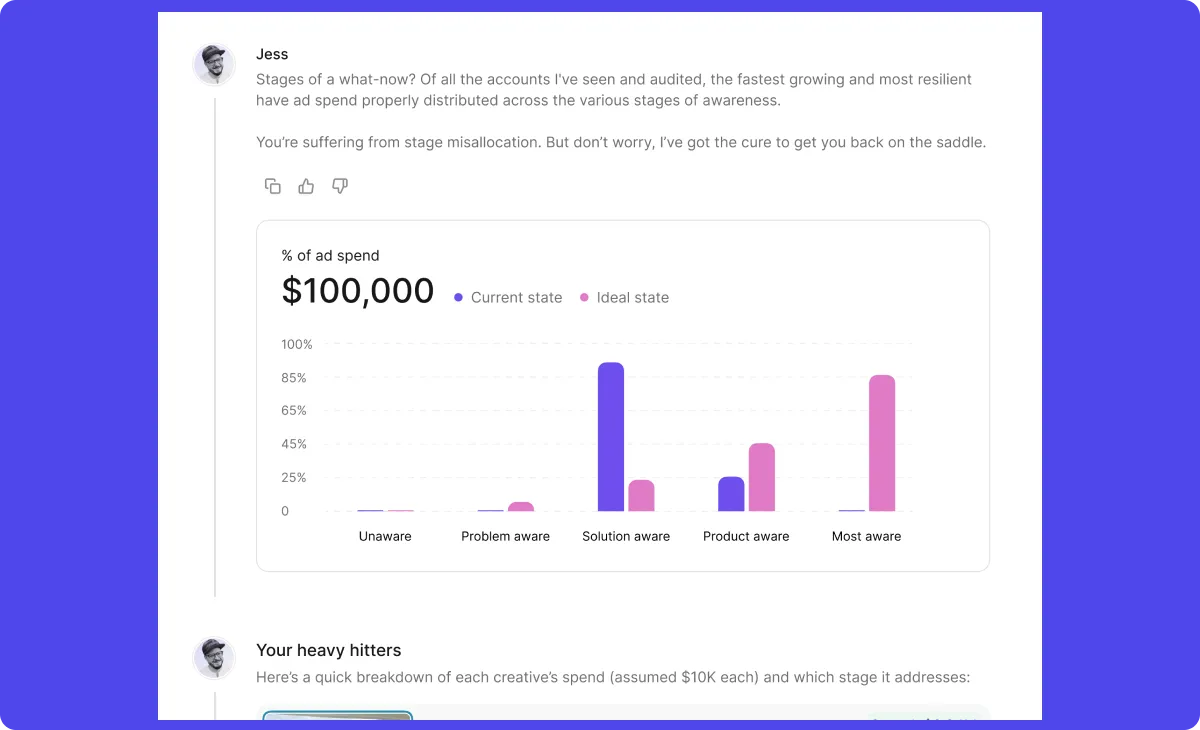
Gap one: Awareness stage imbalance Most brands over-invest in bottom-funnel creative (stages four–five) while ignoring top-funnel opportunities (stages one–three). This creates a leaky funnel where you're not feeding enough qualified prospects into your system.
Gap two: Message-market mismatch You're using product-focused messaging for problem-aware audiences, or educational content for ready-to-buy customers. This mismatch kills conversion rates.
Gap three: Creative testing myopia Your creative testing strategy focuses on surface-level elements (colors, images) instead of deeper psychological triggers related to awareness stages.
Gap four: Funnel optimization blindness You're optimizing individual ads instead of the entire customer journey mapping process from awareness to purchase.
Step three: Implement your creative strategy framework
Create awareness-stage-specific creative assets:
For unaware audiences:
- Educational blog content targeting general industry topics
- Social media posts highlighting common industry problems
- Video content that introduces problems subtly
- Podcast appearances discussing industry trends
For problem aware audiences:
- How-to guides addressing specific pain points
- Problem-focused ad creative
- Educational webinars
- SEO-optimized content for problem-related keywords
For solution aware audiences:
- Comparison guides and case studies
- Solution-focused video content
- Educational email sequences
- Retargeting campaigns with solution-oriented messaging
For product aware audiences:
- Detailed product demonstrations
- Customer testimonials and reviews
- Competitive comparison content
- FAQ-focused creative
For most aware audiences:
- Limited-time offers and promotions
- Urgency-focused ad creative
- Abandoned cart recovery campaigns
- Loyalty program promotions
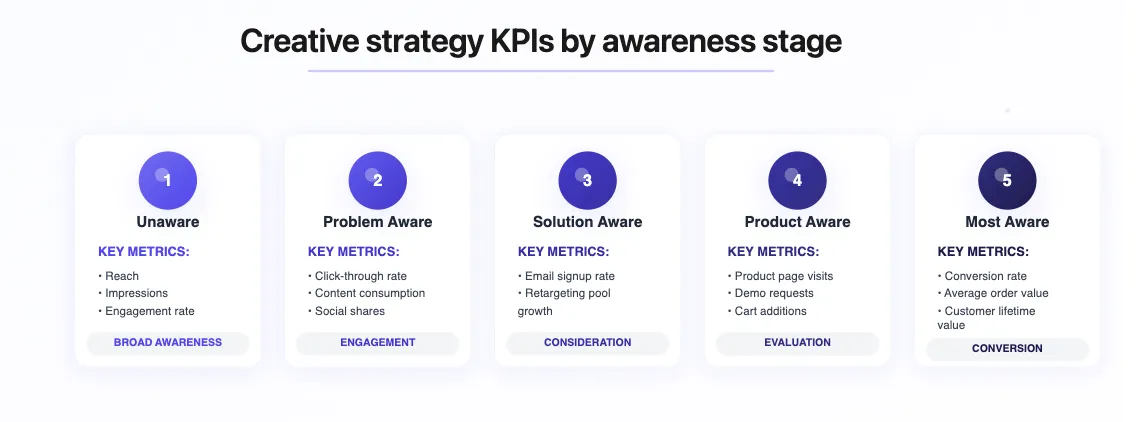
Measuring success: Creative strategy KPIs by awareness stage
Awareness stage metrics
- Unaware: Reach, impressions, engagement rate
- Problem aware: Click-through rate, content consumption, social shares
- Solution aware: Email signup rate, retargeting pool growth
- Product aware: Product page visits, demo requests, cart additions
- Most aware: Conversion rate, average order value, customer lifetime value
Common creative strategy mistakes (and how to fix them)
Mistake one: Skipping the awareness stage audit
The problem: You're creating creative without understanding your audience's awareness distribution
The fix: Conduct a customer awareness audit using surveys, customer interviews, and analytics data
Mistake two: One-size-fits-all creative approach
The problem: Using the same creative messaging for all awareness stages
The fix: Develop stage-specific creative assets and messaging frameworks
Mistake three: Ignoring awareness stage progression
The problem: Not nurturing customers through the awareness journey
The fix: Create awareness stage progression campaigns that move customers through each stage systematically
Mistake four: Focusing only on bottom-funnel creative
The problem: Over-investing in ready-to-buy audiences while ignoring top-funnel opportunities
The fix: Allocate budget across all awareness stages, with emphasis on feeding the top of the funnel
The future of creative strategy in 2025: AI-powered awareness analysis
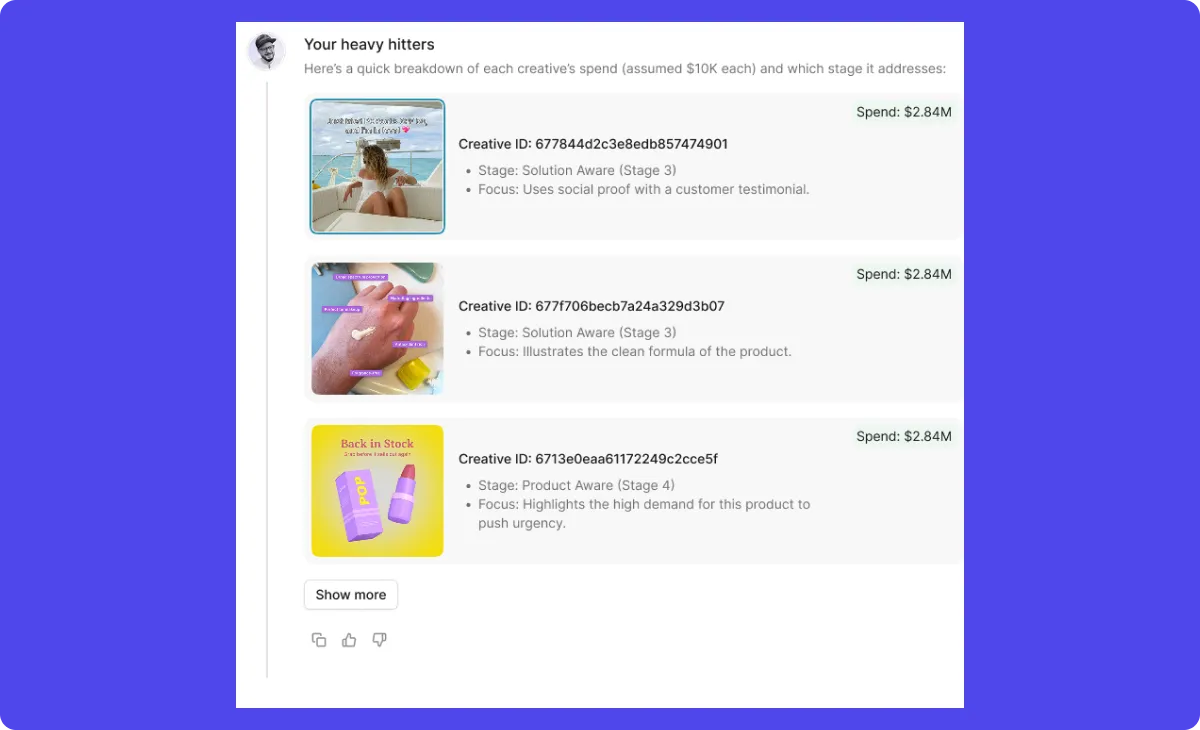
Modern ecommerce brands are leveraging AI to analyze creative strategy gaps and optimize for customer awareness stages. Advanced tools can now:
- Analyze customer awareness distribution across your audience
- Identify creative strategy gaps in your current campaigns
- Recommend awareness-stage-specific messaging for better conversion
- Automate creative testing based on awareness stage psychology
- Predict customer awareness progression to optimize timing
This represents a fundamental shift in how we approach creative advertising strategy — moving from intuition-based creative decisions to data-driven awareness analysis.
Your next steps: Implementing awareness-based creative strategy
Immediate actions (this week)
- Audit your current creative assets using the five awareness stages framework
- Identify your biggest creative strategy gaps
- Survey your customers to understand their awareness distribution
- Create awareness-stage-specific customer personas
Short-term implementation (next 30 days)
- Develop creative assets for your biggest awareness stage gaps
- Launch awareness-stage-specific campaigns
- Implement proper tracking for awareness stage progression
- Create nurture sequences to move customers through stages
Long-term strategy (next 90 days)
- Build a comprehensive creative library for all awareness stages
- Implement advanced funnel optimization based on awareness data
- Develop predictive models for customer awareness progression
- Scale successful creative strategies across all campaigns
Transform your creative strategy with awareness-based approach
The difference between successful ecommerce brands and struggling ones isn't budget, products, or even targeting — it's understanding where your customers are in their awareness journey and speaking to them accordingly.
By implementing the five stages of customer awareness framework in your creative advertising strategy, you'll:
- Reduce creative strategy gaps that kill conversion rates
- Improve ad performance across all funnel stages
- Increase customer lifetime value through better nurturing
- Scale your business with predictable, systematic creative processes
The brands winning in today's competitive landscape aren't just creating better ads — they're creating smarter ads that match their customer's psychological state. This awareness-based approach to creative strategy isn't just a nice-to-have; it's becoming essential for sustainable growth.
Ready to fix your creative strategy gaps?
If you're ready to implement an awareness-based creative strategy but need expert guidance, consider working with a specialized AI creative strategist who can analyze your specific situation and provide customized recommendations.
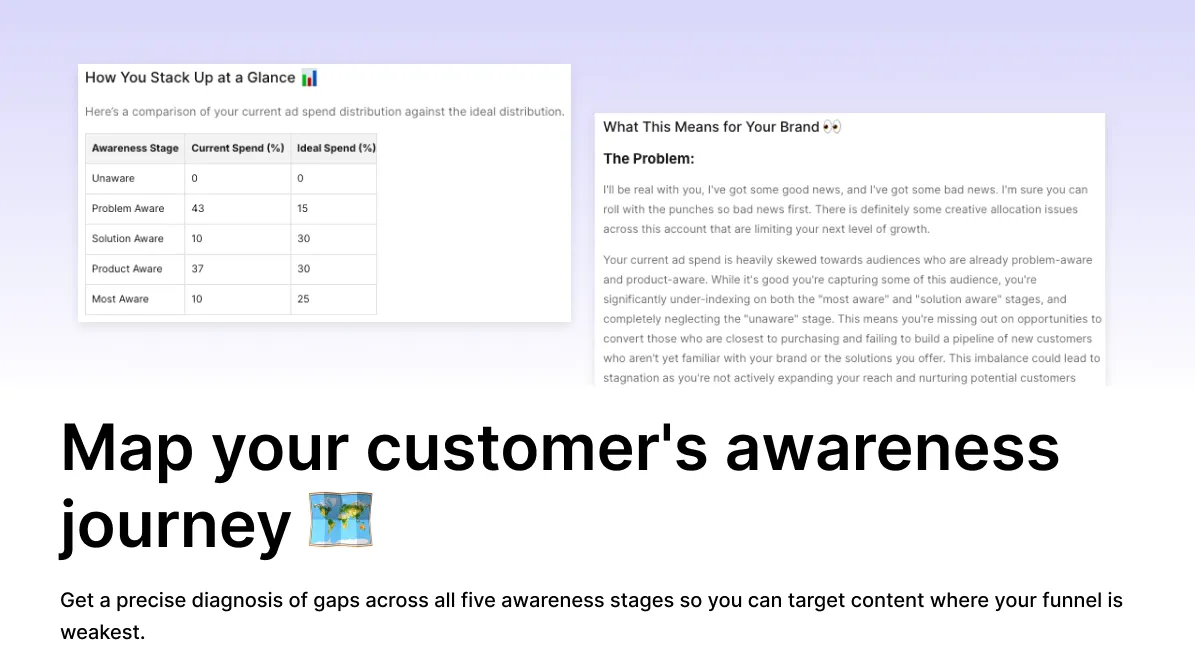
Discover Jess Bachman's AI Creative Strategist — designed specifically for DTC brands struggling with creative strategy gaps. Jess's AI agent can conduct a customer awareness stages audit of your ad account, identify exactly where your creative strategy is failing, and provide specific recommendations to fix your conversion issues.
Key features of Jess's AI Creative Strategist:
- Customer awareness stages audit — Get a precise diagnosis of gaps in your creative strategy
- Creative messaging analysis — Ensure your ads match your audience's awareness level
- Base unit optimization — Build converting creative assets for each awareness stage
- Expert-level insights — Leverage Jess Bachman's proven strategies from working with eight and nine-figure DTC brands
Get started with a free trial and see how awareness-based creative strategy can transform your ad performance.